RISTA前沿大讲堂
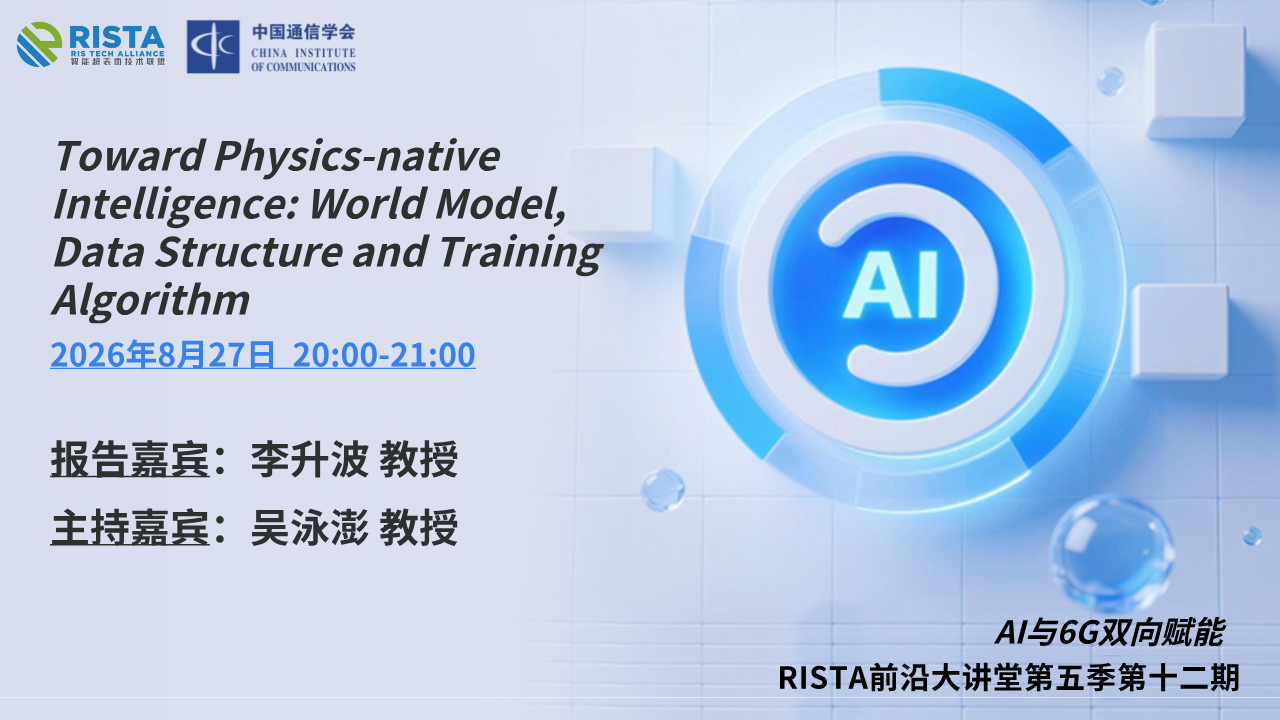
Toward Physics-native Intelligence: World Model, Data Structure and Training Algorithm
- RISTA前沿大讲堂 第五季第十二期
- 时间:2026年8月27日 20:00-21:00
- 演讲嘉宾:李升波教授
- 主持嘉宾:吴泳澎教授
As artificial intelligence advances beyond vision and language processing toward embodied systems—including autonomous driving and robotics—prevailing deep learning paradigms are confronting fundamental challenges. This talk presents a systematic overview of physics-native intelligence (Phi), covering its core design principles and methodologies for constructing its world model, data structure, and training algorithm. Four representative physics-native algorithms are elaborated: (1) RAD: A neural network optimizer engineered with built-in symplectic preservation to guarantee long-term training stability. (2) DACER: A reinforcement learning algorithm that equips neural network policies with the capacity to model multi-modal action distributions. (3) RACS: A ternary iteration framework for addressing safety constraints, which jointly learns the feasible region and optimal policy with provable monotonicity and convergence guarantees. (4) BOOM: An algorithm enabling bidirectional co-improvement with reliance on world model. By internalizing planning capabilities directly into the policy, it substantially enhances sample efficiency.

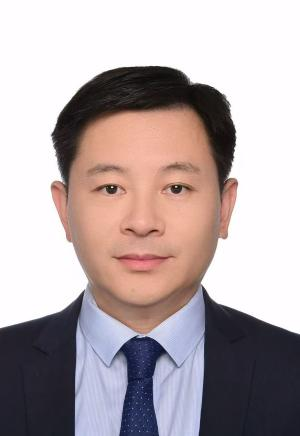
李升波,清华大学车辆与运载学院、人工智能学院 教授/博导。入选国家高层次领军人才、教育部青年科学奖获得者、交通部科技创新领军人才等。他的研究构建了物理原生智能(Phi, physics-native intelligence)的模型、数据、算法设计框架,围绕绝对安全性保障理论,强化学习三元迭代算法,辛几何神经网络优化器,多模态隐式世界模型,几何约束贝叶斯滤波器及其自动驾驶/机器人应用做出了重要贡献。曾获国家科技进步二等奖、国家技术发明二等奖、中国汽车工业科技进步特等奖、中国自动化学会自然科学一等奖等。担任中国汽车工程学会人工智能分会首任主任、中国自动化学会汽车控制与智能化专委会副主任、中国智能网联汽车产业创新联盟人工智能工作组组长等。