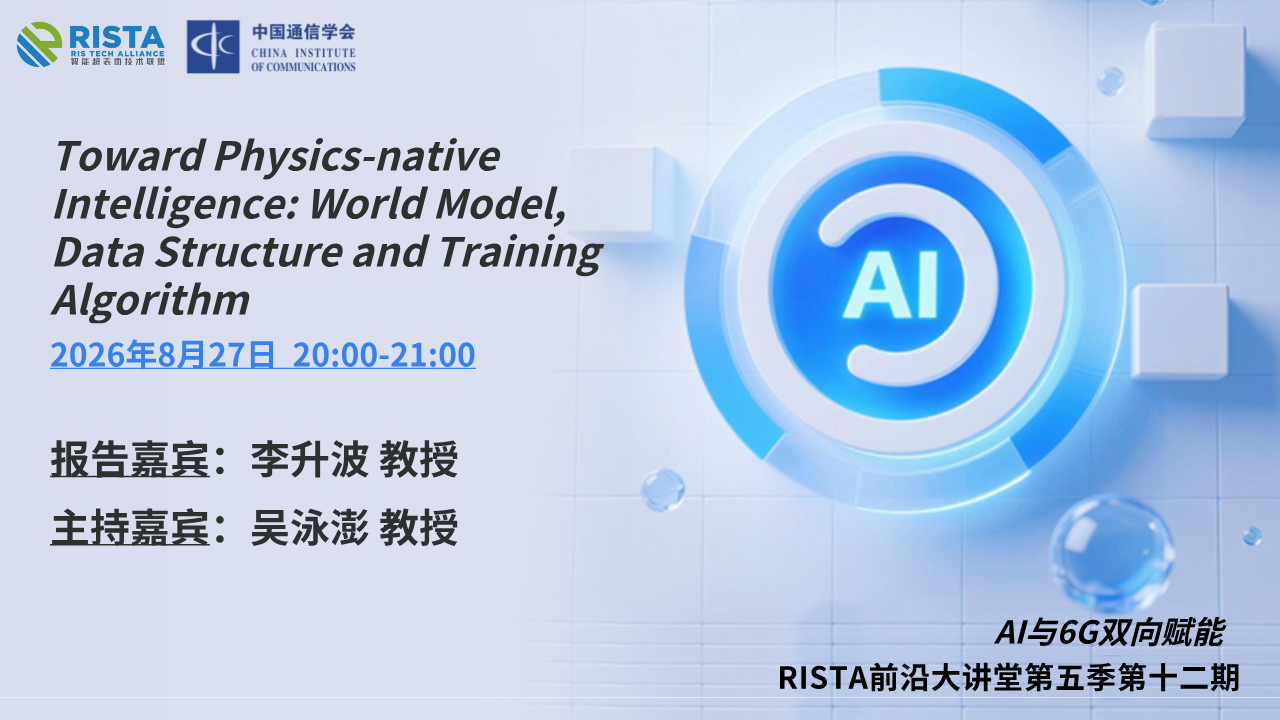
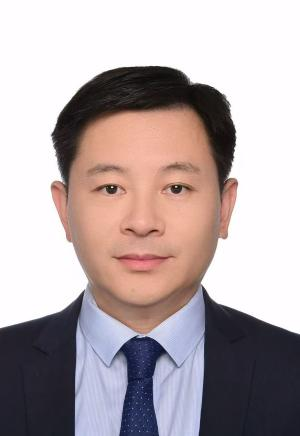
Shengbo Li is a Professor at School of Vehicle and Mobility, and School of Artificial Intelligence, Tsinghua University. Before joining Tsinghua University, he has worked at Stanford University, University of Michigan, and UC Berkeley. His research has established a systematic framework for physics-native intelligence (Phi), and its world models, data structure, and training algorithms. On its basis, he and his team have contributed to absolute safety guarantees and ternary iterative mechanism for reinforcement learning, symplectic neural network optimizer, multimodal latent world model, geometry-aware Bayesian filter, as well as their applications in autonomous driving and robotics. His important awards include National Leading Talents in Sci. and Tech. Innovation in China, Youth Sci. & Tech Award of Ministry of Education, and Youth Sci. & Tech. Innovation Leader in Transportation Sector, National Sci. & Tech. Progress Award in China (Second Prize), National Award for Technological Invention in China (Second Prize), Grand Prize of Science and Technology Award of China in Automotive Industry, Natural Science Award of Chinese Association of Automation (First Prize). He also serves as the director of Technical Committee on AI of SAE-China, deputy director of Technical Committee on Vehicle Control and Intelligence of CAA, and the leader of AI working group in China Industry Innovation Alliance for ICVs.