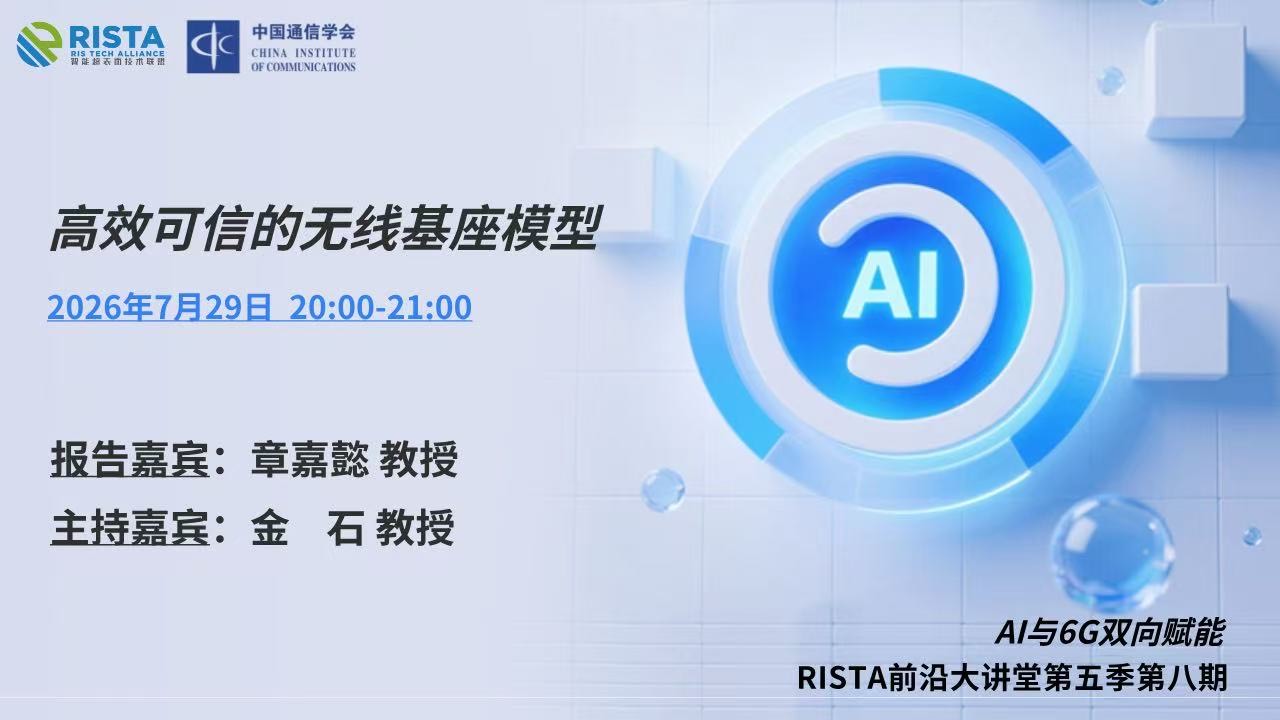

Zhang Jiayi is a Professor and Doctoral Supervisor at the School of Electronic and Information Engineering, Beijing Jiaotong University, who has been selected for the National Program for Young Talents and the Young Talent Support Project of the China Association for Science and Technology, and is an Alexander von Humboldt Fellow, IEEE Communications Society Asia-Pacific Outstanding Young Researcher, Elsevier Highly Cited Chinese Researcher, one of the World’s Top 2% Scientists, an ITU Young Scientist, and an Outstanding Science and Technology Worker of the China Institute of Electronics; his main research direction covers theories and methodologies of multi-antenna transmission, and he has published over 100 academic papers in top international journals with more than 15,000 Google Scholar citations, winning a series of awards including the Second Prize of the National Natural Science Award, the First Prize of the Natural Science Award of the China Institute of Electronics, the Second Prize of the Natural Science Award of the Ministry of Education, the Second Prize of the Beijing Natural Science Award, five IEEE best paper awards from JOCS, ICC, WCSP, APCC and UCOM, as well as the Excellent Industry-University-Research Cooperation Project Award from ZTE Corporation; he currently serves as an editorial board member of IEEE JSAC, IEEE WCM, IEEE TCOM and IEEE TWC, a young editorial board member of Acta Electronica Sinica and Signal Processing, an editorial board member of Radio Communications Technology, Deputy Secretary-General of the Intelligent Transportation Information Engineering Branch under the China Institute of Electronics, Deputy Group Leader of the Intelligent Metasurface Task Force of the IMT-2030 Promotion Group, and a member of the Young Expert Committee for Industry-University-Research Cooperation Promotion affiliated to ZTE Technology Magazine Press.